
Utility Trenching & Drainage in Utah
Utility trenches dug, bedded and backfilled for new builds, shops and ADUs, and drainage fixes that keep water off foundations and driveways.
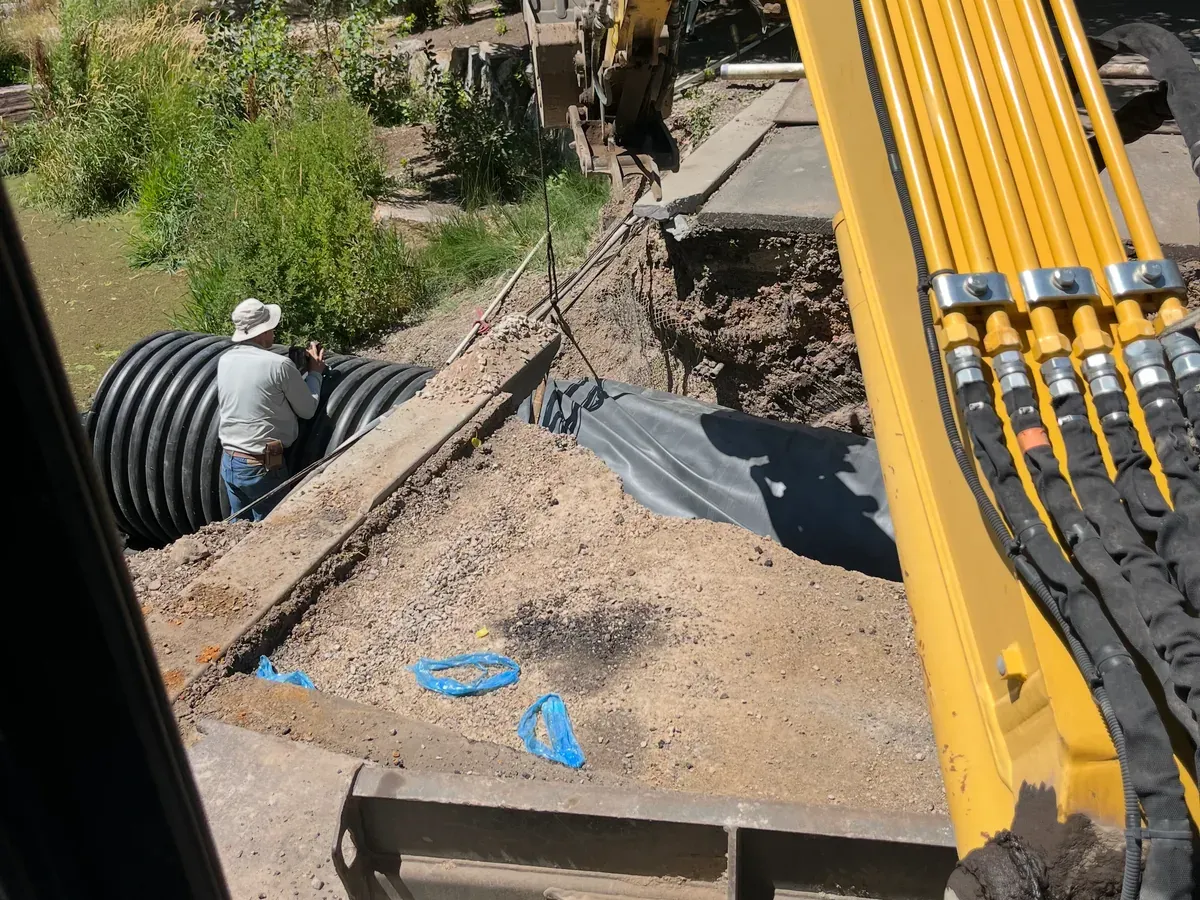
Trenches Dug Right, Water Sent Where It Belongs
Every new home, shop, barn or ADU needs lines run to it: water, power, gas, fiber. Each one needs a trench dug to the right depth, bedded, inspected and backfilled so the line is protected and the ground doesn't settle later. On mountain lots and acreage those runs can be hundreds of feet long through rock.
Water on the surface is the other half of the job. Runoff from snowmelt and summer storms that sits against a foundation, washes out a gravel drive or floods a yard needs somewhere to go. Ritz Excavation & Demolition installs French drains, curtain drains, culverts and swales, and regrades the ground so water moves away from what you built.
What's Included
- Water line trenching
- Electrical, gas and fiber conduit trenching
- Long utility runs to shops, barns and ADUs
- French drains and curtain drains
- Driveway culverts and drainage swales
- Grading water away from foundations
Planned for Valley and Mountain Conditions
We plan for lakebed clay, cobble, groundwater and frost before we price the job, so it doesn't turn into a surprise halfway through.
Rocky Ground
Cobble and rock on bench and mountain lots slow trenching and need the right machine.
Frost Depth
Water lines have to sit below frost, which is deeper at elevation.
Snowmelt Runoff
Spring melt finds every low spot, so drainage has to be planned before it hits.
Existing Lines
Old private lines often aren't mapped, so we locate before we dig.
Who We Work For
Homeowners
Running water or power to a new shop, barn or ADU, or fixing water that pools against your house or washes out your drive.
Builders & Contractors
Utility trenching and site drainage for new construction, dug and backfilled on your schedule.
How the Job Works
- Walk the Route We look at where the lines run or where the water is going, and what's in the way.
- Estimate A written scope for trench length and depth, drain pipe, rock and restoration.
- Locates and Permits Public utilities are marked through Blue Stakes and any needed permits are pulled.
- Dig and Install Trenches are dug to depth and shored where needed; conduit, pipe or drain rock goes in.
- Backfill and Restore Lines are inspected, then trenches are backfilled, compacted and the surface restored.
What Affects the Cost
Every job is priced to the site after we've seen it.
What We Don't Do
We stick to the dirt work and coordinate with these trades on your project:
“Jeff is a fantastic and talented contractor. Jeff’s capabilities with equipment, like an excavator, are second nature to him. He’s fantastic at excavation work, building rock walls, creating waterfalls, etc.”
Frequently Asked Questions
How far ahead do I need to call Blue Stakes before digging?
Utah law requires notice to Blue Stakes of Utah at least 48 hours before digging, not counting weekends and holidays. On our jobs we place the locate request and wait for the marks before we dig.
Will Blue Stakes mark every line on my property?
No. Blue Stakes notifies public utility owners, who mark their own lines. Private lines, like a water line to a barn or power to a detached garage, usually aren't marked, so we locate them before digging.
What is a French drain and do I need one?
A French drain is a trench lined with fabric, filled with drain rock and a perforated pipe that collects groundwater and carries it away. It helps when water pools against a foundation, soaks a basement wall or sits in a low spot in the yard. Sometimes regrading the ground is all that's needed, and we'll tell you which.
Do I need a permit for a driveway culvert?
Usually, if the culvert sits in a road ditch. The city, county or UDOT controls the right-of-way depending on who owns the road, and they set the pipe size and placement.
How deep do trenches need to be?
It depends on the line. Water lines go below frost depth, which runs deeper in the mountain towns than on the valley floor. Power, gas and fiber each have their own depth rules from the utility and the code. Trenches 5 feet or deeper are shored or sloped for the crew's safety.
Where We Do This Work
We provide this service across Salt Lake, Utah, Summit and Wasatch counties. Choose your area to learn more.
Ready to Dig In?
Contact Ritz Excavation & Demolition for an estimate on your project in Salt Lake, Utah, Summit or Wasatch County.